
Projects

Browse through our collection of selected research projects and discover the diversity of European cooperation in Lower Saxony!

ERC Grant for Prof. Philippe van Basshuysen’s studies on the influence of scientific models on reality

On 1 February 2024, a new ERC Starting Grant was started at Leibniz University Hannover (LUH). Prof. Dr. Philippe van Basshuysen has received the prestigious European Union funding to spend the coming five years researching how scientific models not only reflect the world but can also change it. His project MAPS – Managing Performative Science also develops strategies for dealing with this phenomenon in a better way.

Lukas Hakelberg receives ERC grant for his research on the emergence of tax havens in the Global South

The ERC has awarded Prof. Dr. Lukas Hakelberg a Starting Grant for his project entitled “The Whiteness of Wealth Management: Colonial Economic Structure, Racism, and the Emergence of Tax Havens in the Global South (WOWMA)”. During its runtime, he will analyse the development of tax havens with a focus on colonial economic structures, income tax adoption, the survival of white oligarchies, and racism.

From the lab to the market: enabling bone repair

When bones fail to heal – for example after an accident or cancer treatment – bone defects remain, placing a burden on patients as well as society and the economy. “Worldwide, more than four million operations per year require bone grafts or substitutes. At the same time, current treatment options are limited.

Turn-taking – The communicative interplay

Is cooperative communication unique to humans? This view is challenged by Prof. Dr. Simone Pika, a cognitive biologist, in her ERC Consolidator Grant project “Taking turns – The ‘missing’ link in language evolution?”. Here, Pika and her team of six are looking at the system of “turn-taking”, the communicative interplay.

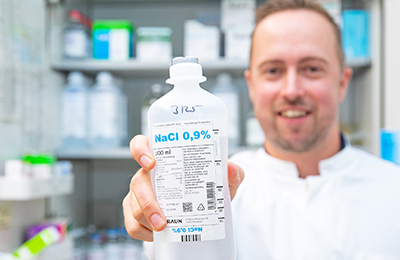
More safety for medicines

Medicines that are injected must be continuously tested for impurities as part of their production and release, as these can cause fever or even blood poisoning. Until now, this has mostly been done using animal tests, animal products or the so-called monocyte activation test (MAT).