
Leuphana University Lüneburg
Leuphana School of Sustainability and the Institute of Sustainability Governance
DATA & FACTS
Project
2026-2031
Management
Prof. Dr. Jens Newig
EU-Funding line
European Research Council (ERC)
Projektleitung: Prof. Dr.-Ing. Arno Kwade
Projektname: „Li-Ion Pilot Lines Network“ (LiPLANET)
Keywords: Energie, Mobilität, Partner
How Public Participation Drives Sustainable Decision-Making: ERC Advanced Grant for Leuphana-Prof. Dr. Jens Newig
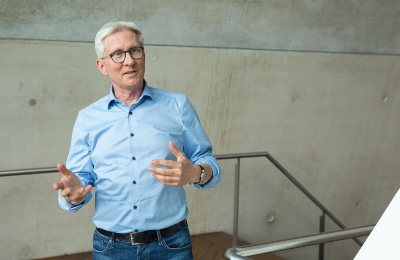
Prof. Dr. Jens Newig of Leuphana University Lüneburg has been awarded an ERC Advanced Grant by the European Research Council (ERC). Together with his research team, he will investigate over the next five years how—and under what conditions—public participation contributes to sustainable, equitable, and democratically legitimate decision-making. For the first time, the project will use artificial intelligence to enable a global comparison of participatory processes.
Citizens’ assemblies advise on climate policy, municipalities involve residents in budget planning, and even authoritarian regimes employ forms of participatory planning. Public participation is expected to improve decisions on environmental, climate, and societal issues while strengthening democracy. Yet despite the growing global importance of participatory approaches, research has so far been able to explain only to a limited extent when participation is truly successful—and when it is not. Existing evidence is based largely on individual case studies or regionally limited research and can therefore only be generalized to a limited degree.
This is precisely where the research project GAPS – Global Assessment of Participation in Sustainability Governancecomes in. Its objective is to provide the first systematic assessment of which forms of public participation contribute to effective, equitable, and democratically legitimate decision-making.
“There are thousands of individual case studies on participatory processes worldwide. Our goal is to bring this knowledge together and make it comparable,” says Prof. Dr. Jens Newig, Professor of Governance and Sustainability at the School of Sustainability at Leuphana University Lüneburg.
Together with his international research team, he aims to analyze nearly all documented participatory processes from around the world over the past decades. A large share of the relevant literature has not been published in English but appears in edited volumes, reports, or local publications and has therefore remained largely invisible to the international research community. “A purely human research team could not accomplish an analysis of this scale,” says Newig.
Methodologically, the project combines statistical analyses and qualitative case studies with innovative AI-assisted approaches. Large language models such as Claude and Gemini will support the research team in analyzing thousands of scientific publications in multiple languages. In doing so, the project breaks new methodological ground. All findings will be validated through multiple independent analyses to ensure scientific robustness.
The study will include participatory processes from established democracies as well as from countries in the Global South and authoritarian political systems. “Previous research has shown that genuine citizen influence is often a key factor in successful sustainability decisions. We now want to understand why this is the case and determine whether these relationships hold true across different regions of the world,” says Jens Newig.
One particular challenge is avoiding Western-centric bias. “We must be careful not to unconsciously apply Western standards to participatory processes in entirely different political and cultural contexts,” Newig emphasizes. The research team addresses this challenge through a theoretically grounded coding framework and by deliberately including studies from as many languages, countries, and publication formats as possible.
The use of artificial intelligence also requires rigorous scientific oversight. Large language models may interpret texts differently or produce varying assessments over the course of an analysis. For this reason, every case will be analyzed by multiple models and cross-checked through random comparisons with assessments made by human coders. “Artificial intelligence is a tool for us, not an oracle,” says Newig. “Ultimately, what matters is that the results are scientifically reliable.”
In the long term, the project will establish an open-access knowledge platform. Public authorities, ministries, and organizations will be able to search comparable case studies and draw on the findings to design their own participatory processes.
To carry out the ERC project, Prof. Dr. Jens Newig will establish an international research team at Leuphana University Lüneburg. The project will create one postdoctoral research position and four doctoral researcher positions. The ERC Advanced Grant will provide €2.5 million in funding over a period of five years.
ERC Advanced Grants
ERC Advanced Grants are among Europe’s most prestigious and generously funded research awards. Through these grants, the European Research Council (ERC) supports outstanding researchers in pursuing ambitious projects with exceptional scientific innovation potential. The funding is provided under the European Union’s Horizon Europe research and innovation programme.
Creation date:
15.07.2026
Das könnte Sie auch interessieren …
Projekt: BITS – BICyCLES and its
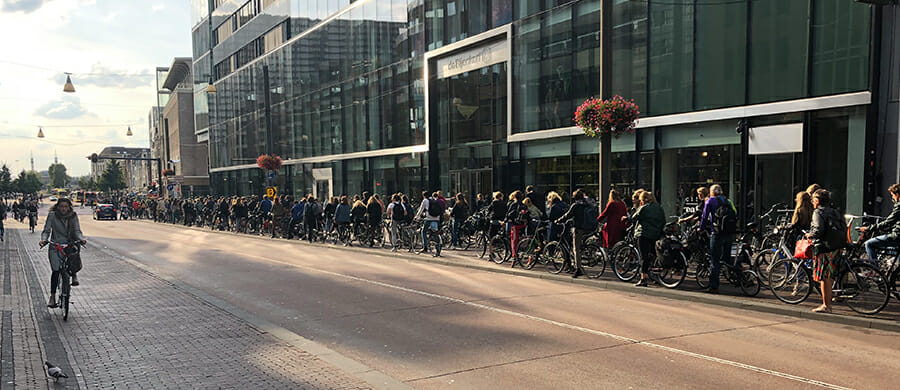
Bicycles and ITS (BITS) ist ein neues Projekt zum Thema Fahrrad und ITS (intelligente Transportsysteme), das darauf abzielt, die CO2-Emissionen um 9 % zu senken und die Fahrradnutzung in den Zielgruppen um 10 % zu steigern! Eine Verlagerung des Verkehrs auf umweltfreundliche Verkehrsmittel ist dringend erforderlich, da Verkehrsstaus, …
ProjeKt: decades
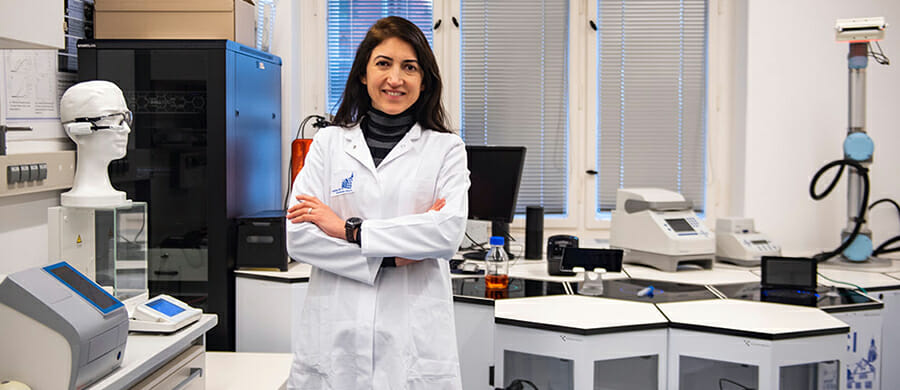
Die chemische Industrie steht derzeit vor der herausfordernden Transformation, klassische, auf Erdöl basierende Herstellungsprozesse von Chemikalien durch nachhaltige, biobasierte Produkte im Sinne einer zirkulären Bioökonomie zu ersetzen. Insbesondere Lösungsmittel spielen in der chemischen Industrie entlang der gesamten Produktionskette eine…